
Art After Engineering: A Curious Retirement Story
Updated: Jan 25

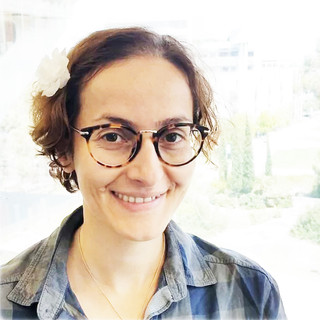
Introduction: Born in Kyiv, Ukraine, and now based in Foster City, Inna Zatulovsky brings together her background in mechanical engineering and a growing, sustainability-minded art practice. She works across a range of hand-based practices—oshibana, felting, paper quilling, collage, and 3D origami—following curiosity wherever it leads.
For Inna, the studio is a place to try, explore, and see what happens next. She loves the calm, focused feeling that comes from working with her hands and hopes her work reminds people how satisfying it can be to create something from nothing.
“My art process is very similar to engineering: I start with an idea, choose materials, run into problems, solve them, and try to arrive at some kind of result. The only difference is that in art, sometimes the “mistakes” are the best part.”
Figure. 2. From left to right: 3D origami made with recyclable paper and a mixed-media collage on paper, reflecting the materials Inna describes as part of her curiosity-driven practice.
The Turning Point (Why Now)
Leila (PEOPLE AROUND US): What made you start making art after retirement?
Inna: All my life I’ve loved working with my hands. I took many craft classes, experimented with different materials, and was always curious about how things work. I guess that curiosity never retired—even when I did.
Leila: Was there a moment when you realized you needed something more than “staying busy”?
Inna: Yes. About five years before retirement, I started thinking seriously about what comes next. I did some research and came up with a plan—very much an engineer’s approach. The plan included regular exercise, healthy eating, volunteering in areas I care about, teaching craft and art classes, having a hobby, getting a pet (most likely a parrot), and staying connected to young people. I still think it was a pretty solid design.
Leila: Did you hesitate before calling yourself an artist?
Inna: Yes—and honestly, I still do. I was born in Ukraine when it was part of the Soviet Union. Back then, you could only call yourself an artist if you graduated from an art school, exhibited your work, and had official recognition. In the U.S., the definition is much broader—anyone who makes art can call themselves an artist. I understand that intellectually, but emotionally it’s still complicated. I don’t know what the “right” answer is, so I’m still negotiating with myself.
Figure. 3. from left to right: Mixed-media collage, needle felting, mixed-media collage on canvas.
Engineering → Art
Leila: How does your background as a mechanical engineer show up in your art process?
Inna: I spent my career in semiconductor manufacturing. That probably explains why I’m fascinated by how things are made. My art process is very similar to engineering: I start with an idea, choose materials, run into problems, solve them, and try to arrive at some kind of result. The only difference is that in art, sometimes the “mistakes” are the best part.
Figure 4. Oshibana pieces with natural materials on paper. You can find Inna's works at Art Bias, Studio #232 and at he Lark Artisan Store in San Carlos.
Learning Without a Lifetime of Training
Leila: What was hardest about starting art without formal training?
Inna: I taught myself everything—mostly through YouTube and by studying the work of other artists. Sometimes I invent my own way of doing things, and surprisingly, it works for me. I’ve learned that formal rules are helpful, but having a clear idea and finding any way to bring it to life is even more rewarding.
Figure 5.Natural materials.
Leila: How do you decide what to learn next?
Inna: That’s a difficult question. Most of the time, a process or material simply intrigues me, and I don’t even know why. Curiosity takes over, and I follow it—usually without a map.
Leila: I’d love to add to this idea of being drawn to materials themselves. I often feel that materials are part of who we are—they speak to us. I’ve come to believe that we don’t only choose materials; sometimes materials seem to choose us, responding to something essential within us.

Relevance, Purpose & Identity
Leila: What does “staying relevant” mean to you now?
Inna: To me, it means staying connected to people who share my interests. When you’re part of a group, something is always happening. You have commitments, responsibilities, and—most importantly—the joy of being around people who share your passions. That keeps life active and meaningful.
Leila: What does art give you?
Inna: Art allows me to keep learning, stay focused, experiment and remain engaged. It also gives me the chance to bring joy to others by teaching classes, which might be the most rewarding part of all.

Figure 7. Mixed-media collage and wool on paper.


Comments