
Capturing Nature’s Fleeting Beauty: Carina’s Journey into Botanical Jewelry
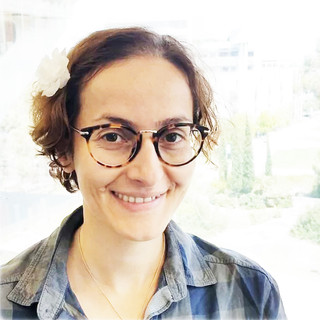
“My art is a PSA [public service announcement] for Mother Nature”_Carina Rossner

Bio: Based in Palo Alto, Carina Rossner is a multidisciplinary artist working across jewelry, mosaics, painting, collage, fiber arts, and stained glass. Her jewelry practice combines metalsmithing, lapidary arts, and sustainable design, featuring unusual minerals and her signature cast-flora pieces in sterling silver and bronze. Inspired by the textures, forms, and fleeting beauty of nature, Carina transforms botanical specimens and reclaimed materials into distinctive wearable works of art. For Carina, each piece is a homage to Mother Nature—a way of preserving fleeting organic beauty in timeless forms while inviting us to slow down and develop a deeper connection with the world around us.
Figure 2. Necklaces from left to right; California poppies in sterling and bronze, cherry blossom collage in bronze with Indian rubies, echeveria succulent in sterling.
Part 1 → Where it All Began
...I got married, had two young kids, and realized I was super busy, but always initiating. Out of the blue, a new acquaintance asked me to take a jewelry beading class with her at the Palo Alto Adult School. I didn’t wear jewelry, wasn’t interested in jewelry, and would never have thought to take a class on it, but after kvetching about no one else initiating, how could I say no?
Figure 3. Strung bead necklaces by Carina.
People Around Us (Leila): Many makers discover art as a "second act" later in life. How did your journey begin, and how long have you been practicing this craft?
Carina: While I have always enjoyed making art, I became a jewelry artist by accident. I had been doing the Silicon Valley thing, launching new tech products and running startups. Then I got married, had two young kids, and realized I was super busy, but always initiating. Out of the blue, a new acquaintance asked me to take a jewelry beading class with her at the Palo Alto Adult School. I didn’t wear jewelry, wasn’t interested in jewelry, and would never have thought to take a class on it, but after kvetching about no one else initiating, how could I say no?
Like the children’s book “If You Give a Mouse a Cookie,” one thing led to another. The beading class reconnected me with my love of stones. I had grown up near the Smithsonian Natural History Museum, obsessed with the mineral exhibit, and minored in them at college. Beading gemstones made me take lapidary classes to cut and polish gems and shape mineral specimens, which caused me to take silversmithing classes and learn to turn those stones into wearable art. That made me into a compulsively creative jeweler, which made me convert part of my house into an industrial studio. This allowed me to make enough pieces of art to send to dozens of galleries around the country, which finally made me realize that I was an artist.
Part 2 → Inspiration
Nature is my main inspiration and I often joke that I don’t create art, I just capture nature’s art for all of us to enjoy.
Figure 4. Mineral specimens (Hemimorphite, Prehnite, Charoite) and the creative progression of cobalt calcite druzy from rough stone to finished jewelry.
Leila: Nature is such a strong presence in your work. What draws you to these natural forms, and why do you feel compelled to preserve and share their beauty?
Carina: I started my artist journey through my love for geology and minerals, much of my work features unusual minerals that you might normally only find in a natural history museum. I feel a responsibility to be the PR team for stunning minerals like prehnite, cobalt calcite, hemimorphite, wavelite, and many others. I love teaching folks about how they form, get their colors, where they are found and other cool factoids. One-of-a-kind specimens for one-of-a-kind people 😊.
Part 3 → From Minerals to Botanical
Figure 5. Carina's silver pieces (left to right): Hydrangea set with cobalt calcite druzy, heirloom iris set with charoite, and hibiscus set with amazonite.
Leila: Your journey began with your love for geology and minerals, but your work eventually expanded into casting flowers and leaves. What inspired that transition, and was there a particular challenge that pushed you in that direction?
Carina: My early metalsmithing work was focused on free-form melting sterling (and rarely gold) into shapes that would echo the textures and forms of the mineral specimens that I wanted to set. But one ornery mineral—Russian charoite—stumped me. I struggled to get the metal to create the furls and frills of this luscious purple stone. One morning walking the dog, I noticed that the stone looked just like the petals of an heirloom iris. So I decided to cast the petals in the casting class I was taking. But the instructor—who had decades of experience—told me that casting organics is, if not impossible, highly fraught, and discouraged me.
Part 4 → The Challenges of Casting Nature

Figure 6. Juxtaposing natural flowers next to their jewellery forms.
Leila: Your instructor discouraged you from casting organics. What happened next?
Carina: Hah! Never one to turn away from a challenge, I spent the next several years and hundreds of attempts to develop a technique to cast flowers and leaves. It is, to put it mildly, a royal pain in the neck. Organics are super thin and molten metal doesn’t flow fully in flat thin spaces. Organics are fragile and shrivel up within hours, and the casting process is time intensive and takes patience—it is a race against the clock. Organics have complicated shapes that require painstaking carving of the extra metal from the casting process. The success rate for casting organics is only about 15%—not for the faint of heart.
But the results are breathtaking! Now my daily dog walks have a double mission of collecting flowers and leaves that have striking forms and interesting textures to cast in my art. Over many, many years, I have been able to successfully cast and make molds for several hundred different specimens. My jewelry turns these castings in sterling or bronze into pendants, earrings, rings, cuffs, and brooches, making my artwork a PSA for the botanical wonders around us.
Part 5 → Healing and Art Therapy
Figure 7. Carina's heart postcard titled, Just Saying - You keep My Heart Safe, and her painted rocks she started doing after her accident for vision therapy.
Leila: You’ve shared that art played a vital role in your recovery from brain injuries, leading you to teach art therapy. If you're comfortable sharing, how has creative practice supported your healing journey, and how does teaching others influence your own work today?
“I needed to have something to do and be around people. The recovery took years but art saved me...”
Carina: Art as healing has played a crucial role in my life. Immediately after I first learned to bead, I had a medical event that left me laid up for several months. Beading necklaces for friends and family kept my hands busy and my mind sane while I recovered. Developing my lapidary and metalsmithing skills and growing my art business gave me a much needed breather from the stresses of raising a young family; it was wonderful to be more than “just mom” and I embraced my identity as an “artist.” But the critical role of art in healing came after I had an accident that caused a major brain injury. Suddenly I was unable to work, struggling with balance and speech, unable to read, unable to focus, stuck home bored and utterly lost. My treatment team suggested I try coloring books. Then I started painting mandalas on rocks to improve my vision tracking. I reconnected with my love of color and form. Gifting and selling the rocks connected me with people and opened up my world a bit. I pulled out my old gemstones and started beading again. I had been gone from jewelry making for about a decade after a divorce, but I decided to try to relearn the lapidary and metalsmithing skills and go back to the group studio. I needed to have something to do and be around people. The recovery took years but art saved me and now I am enjoying creating art and socializing with a warm community of artists at the group studio, Silicon Valley Open Studios, and Viewpoints Gallery (a co-op gallery in Los Altos).
Because I benefited so much from art as a healing medium, I now teach an art therapy class at a local medical clinic that helps patients struggling with chronic pain. It is inspiring to see them use art projects to relax, awaken other parts of their brains, find new ways to express themselves, and sometimes even find new careers to pursue.
Part 6→ Color and Cultural Roots

Figure 8. Carina's special love for irises in the stained glass window in her Victorian called Iris House.
Leila: What are the main cultural or artistic influences behind your work? Among your collections; like your Story Necklace series, do you have a personal favorite piece?
Carina: Purple and green have always been my favorite colors so it is no surprise that irises are my favorite flower and stones like charoite and phrenite are my favorite minerals. My house is an 1893 refurbished painted lady Victorian that I have colored with periwinkle, purples and blues and called Iris House. The garden is filled with hundreds of heirloom irises and tons of native plants that bloom in purple, blue or white. Nature is my main inspiration and I often joke that I don’t create art, I just capture nature’s art for all of us to enjoy.
Part 7→ Process, Experimentation, & Artistic Freedom
“The studio monitor reassured me and told me, ‘There is no such thing as a mistake in art—whatever you make is art.’”
Figure 9. Ocean Jasper, green oval set in reticulated silver (the process by which you semi-melt the metal and let it furl/crinkle how it likes based on how the physical properties of the metal move under heat).
Leila: When you begin a new piece, are you an intuitive improviser or a precise planner? What role does experimentation play in your creative process?
Carina: The first time I was allowed to work in the group metalsmithing studio, after passing two ten-week classes and getting the instructor’s approval, I messed up royally. I was stressed and nervous trying to do everything right, but I held the acetylene torch in the wrong place too long and melted through the metal. The studio monitor reassured me and told me, “There is no such thing as a mistake in art—whatever you make is art.” I took her advice and just rolled with it, putting the torch on the metal and letting it do what it wanted. The result was one of the most beautiful things I have ever made, and ever since then I try very hard not to have too firm an intention when I go into the studio to create.
Part 8→ Organic Silver and Gold
Figure 10. From left to the right: Watermelon tourmaline set, Embers, and Zillians.
Leila: How does this freedom and experimentation shape your Organic Silver and Organic Gold collections? How much control do you have over the final form?
Carina: I start by recycling precious metals; think sterling tableware, coins, broken bits of jewelry, or sometimes even dental crowns. Then I let the physical properties of the metal dictate what form it will take as I heat it up. I pair the metal with a mineral specimen that seems to jive well with the texture or shape that happened and turn it into wearable art. With my Organics IN Silver and Organics IN Bronze collections, it is a little tighter controlled. I am happy to see what happens when I cast a flora, but if it doesn’t look pretty close to the original, I use it for a one-off piece. Only pieces that fully capture the original form and texture move on to become reproducible molds.
Part 9→ Studio Practice & Reflection on Creative Challenges
“‘Earth’ without ‘art’ is just ‘eh’ but art should respect the earth.”
Leila: Working with rescued remnants is like solving a puzzle! What are some of the technical challenges you face with upcycled materials, and how do you keep your studio organized so all these treasures stay accessible?
Carina: The biggest challenge of having so many different creative avenues is storing all the materials. I make heavy use of all sorts of drawers and storage containers of all shapes. Plastic rolling drawers have taken over my cellar and new sheds seem to pop up in my backyard every couple of years.
Part 10→ Collaboration & The Community We Create Through Art
My house is now full of original handmade art that reminds me of the cool folks I have met and fills me with joy.

Figure 11. Stained glass panel in Carina's home-studio environment and is of her kitchen Bay window. It is especially beautiful because the artwork has become more than an artwork; it has become a daily reminder of a artist friend relationship.
Leila: You’ve participated in and hosted many art shows, and it sounds like the artistic community has become an important part of your life. How have the relationships you’ve built with other artists influenced your creative journey?
Carina: Over the years I have participated in and hosted a lot of art shows. One of my favorite parts of these shows is trading with other artists. My house is now full of original hand-made art that reminds me of the cool folks I have met and fills me with joy. My first profits from my jewelry business went into buying a stained glass panel to put in my front door. The artist made a custom design with irises for me and in the process we became friends. Years later we collaborated on a much larger piece for a bay window set. I designed it and incorporated many of my gemstones and fossils and we assembled it together. Every day I sit at my kitchen table and bask in the colored light and think about what an amazing person he was.
Figure 12. Left to right: Carina's favorite iris pendant and collaborative iris painting with Renee Switkes, currently hanging at Iris House.
Part 11→ The Magic of FabMo & Sustainable Creativity
“They gave me an odd collection of broken bits of jewelry... and even some gold crowns. I melted it all down and made wedding bands that incorporated this ‘love’ they had collected from their extended families.”
Leila: FabMo is such a special community resource for rescuing materials. How did you first get involved as a volunteer, and how has working with reclaimed paper, fabric, and other materials influenced your creative process?
Figure 13. Some collage greeting cards made with FabMo fabrics.
Carina: Creativity is hard to contain and mine has spilled over into many other media. I enjoy working with stained glass mosaics, painting, collage, fiber arts, paper craft, rock painting and many many other projects. A friend introduced me to FabMo and I have gotten hooked on upcycling their fabric samples into greeting cards – sewing hearts and other shapes onto cardstock. I also use FabMo fabric remnants in my art therapy class guiding patients to make flags that represent them. I also love upcycling items from Savers and Goodwill, sourcing empty cigar boxes from the local shop, saving glass mousse jars from Costco, and cruising RAFT (Resource Area for Teachers) to turn trash into art projects.
Leila: To close our discussion on sustainability, what does upcycling mean to you on a personal level? What do you hope people feel when they bring one of your handmade creations into their home or wear your jewelry?
Carina: I do my best to upcycle materials in my work. Because metals are so expensive I recycle them whenever possible. For sterling, I use silver coins, old tableware, broken jewelry and anything else that I can verify is actually silver. I melt it down and use it in my casting and free-form melts. For gold, I take a customer’s old jewelry and melt it to make a new piece. My favorite upcycling project was a set of wedding bands that I designed and made for good friends. They collected gold from all of their family members and gave me an odd collection of broken bits of jewelry, chains, and even some gold crowns. I melted it all down and made wedding bands that incorporated this “love” they had collected from their extended families – perfect for a young couple just starting out.
I also recycle and upcycle other materials like fabric from FabMo to make greeting cards (I sew fabric shapes onto card stock), use old magazines to make collages, scavenge wooden and glass items from Savers to turn into art projects, upcycle empty cigar boxes into treasure chests and do my best to incorporate used materials into my art. “Earth” without “art” is just “eh” but art should respect the earth.
Part 12→ How Art Shapes Us
I strongly believe that we are ALL artists and just need to give ourselves permission to explore our creative sides
Leila: Looking back on your journey, how has your art practice transformed the way you see yourself, others, and the world around you?
Carina: Women have many special challenges in society as we navigate expectations, biases, prejudices, biology and other realities. One of the advantages we have, however, is that we are more likely to pivot multiple times during our lives. At each transition of life stage for me (or my kids) I have an opportunity to change and reinvent myself. I feel very fortunate that I was able to turn some major life hurdles into this new artist journey. Being an artist has given me something productive to do, expanded my social world to include all sorts of interesting people (who I would never have met had I stayed in my “lane”), and brought a new lens to how I walk around the neighborhood and adventure the world. I strongly believe that we are ALL artists and just need to give ourselves permission to explore our creative sides.
Leila: I strongly agree with you. As an artist and community educator I always say the same thing: I believe everyone is an artist, and we all shape our society and communities in one way or another. To me, that is the beauty of a diverse community—where we can celebrate our humanity, our creativity, and our interconnectedness.
Leila: Carina’s story is a beautiful reminder that life’s greatest treasures often begin where we least expect them. When we refuse to let fear hold us back and stay open to trying new things, the smallest steps, a routine stroll outside or saying 'yes' to a craft class alongside a friend, can completely reshape our path. Through her eyes, Mother Nature becomes not just an inspiration, but a teacher, showing us that when we nurture our curiosity, our creative lives can blossom in boundless, unexpected ways.
Thank you so much, Carina, for sharing your artistic journey and inspiring work with FabMo and the People Around Us community.
The Artist’s Corner: Fun Facts & Favorites

In Carina's own words,
My most unusual studio companion is my 20lb muttadoodle Julie. She is my excuse to roam the neighborhood several times a day and search for interestingly textured/shaped flora to cast.
The FabMo scrap material I can never resist taking home is florals - especially iris. Though I really try hard to get a full rainbow of colors so that I can make a variety of cards, flags and other projects with these gorgeous fabrics.
I feel most in the creating flow when I am sitting in my studio surrounded by mineral specimens and floral castings.
A book or resource I recommend to every maker is The Palo Alto Art Center is an amazing trove of classes, equipment, instructors, fellow artists, gallery and events. Over the years I have taken many different classes and immersed myself in different media. It is a warm and friendly place to hang out and create.
The studio tool I’d rescue first in an emergency is my computer - while it doesn't help me create it does keep me organized and stores all my photos and inventory spreadsheets. Most artists, me included, would rather be creating than doing the business end of this gig but...
An art piece that I never want to sell is the first piece I made in the metal smithing studio where a mistake turned into a beautiful piece of art.
If I want to buy another artist’s craft, it is florals in stained glass (irises of course!) or wall art. About two years after I started casting flora I walked around my house and realized that every single thing hanging on my walls was a floral of some sort - accumulated over the past several decades without me even realizing that I was obsessed with flowers!
The materials that I collect the most is unusual and gorgeous mineral specimens.
Artist Contact
ARTIST WEBSITE: Carina Rossner
INSTAGRAM @carinarossnerorganics
FACEBOOK @Carina Rossner
You can also visit and purchase Carina’s work at Viewpoints Gallery, 315 State Street, Los Altos, CA.
Inspire • Create • Connect
As part of the People Around Us interview series, I invite readers to reflect on how each conversation might inform and enrich their own creative journey. Inspired by the artist's insights and experiences, these reflections highlight ideas that resonate beyond the interview itself.
Inspire
Beauty is often closer than we think: Carina reminds us that we don’t have to go far to find inspiration. It can be right in our own front garden, in a flower along our daily walk, or in the natural details we often pass without noticing.
Say yes to an invitation to create: Even if a particular craft doesn’t immediately appeal to you, giving it a try might spark an unexpected interest or become meaningful later—just as it did for Carina..
Create
Start with what you already have even if you don't feel it: Look closely at what is already in your hands. Inspiration can begin with something as simple as a piece of paper, an old material, or even your phone camera. Take photographs of natural elements, observe their shapes and textures, and let them guide your creative process. Nature has so much to offer us when we take the time to look.
Connect
Sustainability grows through community: Share skills, exchange materials, visit creative reuse centers like FabMo, and learn from one another. Every natural element, mother nature, reused material, repaired textile, shared skill, and meaningful conversation helps us build a more thoughtful relationship with both people and the environment.

Comments