
Finding Beauty Beneath the Surface: A Conversation with Sustainable Textile Artist Zwia Lipkin
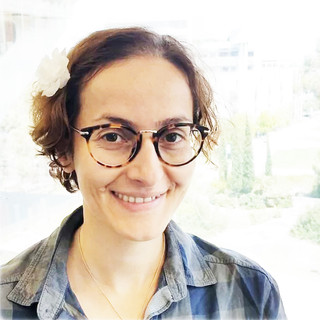
Updated: Sep 11
“Most of the materials that go into my art quilts are repurposed: the different kinds of fabric, the batting, some of the embroidery floss. Regenerative art is my small effort to reduce waste. It's slow work, but I enjoy it. It gives me time to think.”_Zwia Lipkin

Figure 1. Zwia Lipkin next to her work, Cloth Strokes, 36" X 42.5."
Bio: Born in Israel and now based in California, Zwia Lipkin is a textile artist, historian, and recycler whose work bridges sustainability, storytelling, and material exploration. Trained as a historian of China, Zwia works exclusively with home-decor repurposed fabrics—breathing new life into exquisite, discarded textiles to keep them out of landfills—following a zero-waste philosophy wherever it leads. Inspired by nature, travel, and cultural traditions from around the world, her richly layered textile works transform overlooked materials into new visual narratives.
For Zwia, art is both an evolving creative journey and a form of environmental care. Drawn to bold textures, nuanced colors, and the history embedded within materials, she approaches each piece as an opportunity to honor the stories and hands connected to the fabrics she uses. Through experimentation, curiosity, and continuous learning, Zwia creates textile works that celebrate transformation, connection, and the beauty found in unexpected places.
Part 1 → Returning to Art
Each piece of fabric I use had a long journey before it came to me. Someone designed it, someone made it, someone dyed, cut, moved, displayed or sold it. FabMo volunteers collected and sorted it. All these people, although unknown to me, become a part of the final artwork.
People Around Us (Leila): Zwia, you’ve described your return to art as a "return to the origins" after a decades-long diversion. When did this return become more than a hobby and evolve into the artistic practice we know today? And in what ways has your background as a historian shaped your attraction to weathered surfaces, layered histories, and the passage of time, as seen in your Traces of Time series?
Zwia: It was actually the other way around. I grew up in a family of upcyclers, and learned to make use of what others might consider “trash” from a very young age. Finding beauty in old, worn things felt natural. This interest became more conscious in art high school, where I started incorporating found objects into my art. My love for the old and weathered probably influenced my later desire to study history.
After high school, I took a very long break from art. I returned to it only after my youngest child started school. Discovering FabMo was the trigger that reignited my creativity in earnest, and started me on an exciting creative journey. At first, I was filled with a strong desire to find use for FabMo’s gorgeous fabrics, which embodied a lot of the things I cared about: bold colors, lustrous textures, and a history. Later, the fabrics became a means of expression, a textile color palette.
Figure 2. From left to right; Traces of Time 1, 12”x16,” Traces of Time 2, 12”x16,” Traces of Time 3, 12”x16”
Leila: As a historian, you preserved and interpreted the past through research and written records. As a textile artist, you work with fabrics that have already lived another life. Do you see your textile practice as another way of preserving history—allowing materials themselves to carry memory, culture, and human experience?
Zwia: When I returned to art, I never intended for it to be another way of preserving history. Yet, art by nature is deeply connected to history, reflecting in many ways the history of the period it is created in, and of the person making it. Looking at my body of work so far, I find many different connections to history.
There are the upcycled materials themselves, of course. Each piece of fabric I use had a long journey before it came to me. Someone designed it, someone made it, someone dyed, cut, moved, displayed or sold it. FabMo volunteers collected and sorted it. All these people, although unknown to me, become a part of the final artwork.
In some pieces, I used fabrics that were owned by people I care about: a piece from a fabric that made the walls of my great-grandfather’s Sukkah; home linens that belonged to my grandmothers; pieces from my late father’s jeans. By using those specific textiles, I deliberately incorporated family history into my work, and commemorated people I love. Family history, in fact, is the topic of several of my quilt series.
Many of my artworks are testimonies to our time. My “State of Human” series, for example, reflects the years of the COVID pandemic and the world events that happened then. My environmental pieces reflect the current state of our planet. Even works influenced by travel reflect real places at a specific time. Finally, there is my personal history, which is tightly reflected in my art as it is in every artist’s artwork.
So in the end, although often unintentionally, each artwork does end up weaving together many different histories, connecting people, places and times.
Leila: Many people believe that if they don't pursue art when they're young, they've somehow missed their chance. Your career beautifully challenges that idea. What would you say to someone who feels it's too late to become an artist?
Zwia: Creativity has many different faces. People can express themselves through art, music, cooking, baking, gardening, choosing outfits and in many other ways. There is no age limit on creativity. We are all creative in different ways. Trying new mediums, experimenting with different techniques, playing with various materials and so on can be fun and rewarding. It’s never too late to try something new.
Part 2 → Inspiration & Artistic Language
Leila: Your inspirations often look "under the skin" of our surroundings; capturing everything from organic cells and tree bark to crumbling Italian walls and peeling billboards. What draws you to find such immense beauty in these hidden, ignored, or imperfect surfaces?
Zwia: I like looking at things up close, something that is reflected in many of my photographs. The general picture can be beautiful, but the close details have textures and structures that look very different and have their own beauty. Closeups are more intimate, and allow me to notice things I wouldn’t have noticed had I not gotten closer.
Leila: I love the story of you looking over your scientist daughter's shoulder and realizing your "little quilties" mirrored the microscopic cells she was studying. How does it feel when your abstract textile work unexpectedly connects to the hidden, organic patterns of the real world around us?
Zwia: I think that everything we create is influenced by things we see, whether we know it or not. In this case, the accidental composition that formed after I tossed the little quilts on the floor felt “right,” although I initially couldn’t explain why. Realizing it was similar to my daughter’s cells was a nice surprise, as it pointed to an unexpected source of inspiration. That realization also connected me to my daughter in a new, different way. The artwork became a collaboration of sorts. This piece is now hanging in my daughter’s apartment, which makes me really happy in yet another way.

Leila: Zwia, many of your works emerge in series; from abstract landscapes to insects, sea life, and figurative compositions. What fuels your desire to work in series? At what point does an observation or a hobby "hook" you tightly enough that you know it needs to become a dedicated body of work?
Zwia: I started working in series fairly early on. Working in a series allows me to explore ideas, themes or techniques in deeper ways. Often, each piece in a series can stand on its own, but together they tell a new, bigger story. Every piece in a series builds on the ones before it, but adds something new. I learn something from each one, even from the unsuccessful pieces. Sometimes I make an entire series in one go. Sometimes weeks or months pass between one piece to the next. I rarely work on individual pieces, as almost every new idea, topic or technique deserves a deeper dive.
Leila: Blue Planet Blues combines discarded plastic bottles with richly textured textiles to address environmental concerns. The contrast between soft fabric and rigid plastic creates a powerful visual tension. What inspired this piece, and what conversation did you hope it would begin with viewers?
Zwia: My father was a marine biologist who used to dive a lot for his work. After he passed away, the problem of plastic pollution in the ocean and the Great Pacific Garbage Patch became national news. I read a particularly distressing news article and thought of my father. I made the quilt as a warning, a means to increase awareness of the damages human activity was causing to the environment. I hope that this piece will make the viewers more aware of the problem, and think about how their own actions and daily habits contribute to it.
Figure 4. Blue Planet Blues, 30" x 45"
Part 3→ The Magic of FabMo & Sustainable Creativity
Leila: We both share a deep familiarity and love for FabMo! When you first stepped into that world of rescued designer upholstery samples instead of traditional quilting cottons, how did those thick, rich textures change the direction of your art?
Zwia: FabMo was the reason I returned to art, and I will forever be deeply grateful to Hannah and Jonathan, and the entire FabMo volunteer team! When I started creating art in high school, textiles weren't even considered as an artistic material. As an adult, I took a beginner quilting class, with the intention of making baby quilts for friends and family every now and then. When I first walked into FabMo and saw those amazing fabrics, a light bulb went on. I immediately fell in love with the fabrics, but had no idea what to do with them. They were too thick for baby quilts (or traditional quilts in general), and I didn’t know how else to use them. It took a while before I made my first bag, with almost zero sewing experience. Once I did, though, I went into a sewing frenzy. For several years I tried to keep FabMo fabrics out of the landfill by turning them into a wide array of functional pieces, which I gave to family and friends, and, once I ran out of people to give them to, the general public. I started experimenting with art quilts as well, but only occasionally. During the COVID lockdown I switched to making textile fine art exclusively, and haven’t looked back.
Figure 5. Some tote bags made with FabMo fabrics.
Taking something that would otherwise go to the trash and turning it into something beautiful is extremely satisfying.
Leila: You maintain an inspiring zero-waste goal in your studio, turning even the smallest fabric scraps into art or greeting cards. What is the most rewarding part of giving these "ignored and unwanted" materials a spectacular second life?
Zwia: Taking something that would otherwise go to the trash and turning it into something beautiful is extremely satisfying. Seeing people actually use it is even better. Finding use for tiny fabric scraps or thread snippets is a kind of challenge I set for myself. A small piece of a bright-colored textile can completely change a bigger piece. I enjoy making large artworks, but tiny ones can be just as fun.
Leila: FabMo is run on an incredible spirit of volunteerism and community. As someone who has experienced it as a shopper, a volunteer sorter of "gack," and a featured artist at the Boutique, how has that community shaped your journey as a local artist?
Zwia: FabMo is a wonderful, supportive community. I enjoyed learning more about how it operates through volunteering in different roles. Each piece of fabric goes through a long process before it can go home with someone. Volunteers are responsible for everything from collecting the fabrics at the Design Center, to sorting it, to displaying and selling it. Over the years, I benefited a great deal from other people’s volunteering, and enjoyed giving back to the community by volunteering myself. Meeting some of the friendly people that make it happen is one of the best aspects of being a part of the FabMo family!
Knowing more about where my fabrics come from made my art more meaningful. The encouragement I got from fellow volunteers pushed me to try new things and develop in new directions.
Part 4→ Studio Practice & Reflection on Creative Challenges
Art, for me, is all about playing and listening to your gut.
Leila: Your work feels like a continuous, evolving adventure and discoveries which involve deep research both on subject and craft. For anyone looking to start their own creative "second act" or dive into sustainable art, what is one joyful piece of advice you’d offer them about playing with scraps and letting the materials dictate the outcome?
Zwia: Art, for me, is all about playing and listening to your gut. There are no rules, no right or wrong. Play, experiment, keep learning new techniques so you can express yourself better. Don’t over think it. Not every creation is a masterpiece, and that’s OK. Learn from failures as well as from successes, and remember to have fun!
Leila: Is there one work that feels especially personal to you—not necessarily because it's your best work, but because it represents an important moment in your life or artistic growth?
Zwia: Many of my artworks are deeply personal. Choosing one specific piece is hard, so I will choose a series instead. My “Yaacov’s Algae”series is a series of six quilts I made following my father's passing. To create it, I took pictures of his first algae collection, digitally manipulated the images, created digital collages and had them printed on fabric using a commercial printing company. I hand embroidered them over two entire winters, spending weeks of quiet contemplation working on each piece. This series helped me process the deep grief I felt, and made me feel more connected to my dad.

Figure 6. Yaacov’s Algae series
Leila: I also admire your insect series. Although they are rendered in textiles and prints, they still evoke the delicate, restless movements of insects. What continues to attract you to insects as artistic subjects?
Zwia: Insects are really beautiful when you see them up close. They have intricate, delicate bodies, and often beautiful colors, too. I’ve always enjoyed looking at insect collections (especially beetles) at natural history museums. Making textile insects is fun, especially if I take the liberty of using any colors I want. This is a great way to let beautiful fabrics shine.
Figure 7. March to Oblivion, 84' x 34" x 5"
Leila: Your figurative works feel distinctly narrative compared to your abstract landscapes. What stories are you hoping these expressive women figures carry? I'm also struck by the choice of scale—what led you to bring these figures to life on a much larger canvas (the left photo on the bottom chart), and how does the addition of text or words alter their power?
Zwia: These figurative works are a part of my “State of Human” series, which I made during COVID to express different feelings. They are both self portraits and generalized human conditions at the same time. There are twelve pieces in this series, and you can find the stories behind each of them on my blog, by searching “State of Human.” The original pieces are small: they each measure 16”x20.” I later enlarged some of them by printing pictures of the original quilts onto fabric, mostly because I wanted to see if and how scale changes the overall effect.
I rarely add text into quilts, and when I do it serves different purposes, depending on the piece. I made the quilt below following the October 7, 2023 massacre and the hateful worldwide demonstrations that followed. The words capture how I felt better than any image I could think of.
Figure 8. From left to right: What matters Most, 16”x20,” Grief, 16’x20,” Eye of the Storm, 16”x20,” Chasm, 16”x20.”
Leila: Many prolific artists struggle with balancing collecting materials and maintaining an organized studio. How do you decide what deserves to stay, and how do you keep your creative space inspiring rather than overwhelming?
Figure 9. From left to right: Hatism II, 40" x 30," Alternate Reality, 28" x 22.5."
Zwia: I don’t! This is actually a huge problem. Since every tiny piece can be of use, getting rid of things is very difficult. As a result, my creative space is packed-full of STUFF. When I work, I pull out different materials to audition, so there’s always a mess. It really can be overwhelming at times! On the other hand, every now and then two pieces of fabric happen to fall next to each other, giving me new ideas. So there are advantages to the disarray, too. One thing is for sure: my creative space will never make it to a magazine cover.
Leila: When someone spends time with one of your textile works, what do you hope lingers with them after they've walked away?
Zwia: I make art as a way to communicate with others. I pour my own feelings and ideas into my art, but have no control over what feelings and ideas it will stir in others. I hope that people feel SOMETHING when they see my work, and that it somehow relates to their own experiences and lives.
Leila: Many artists have personal ways of working through creative blocks—whether it's taking a walk, stepping away from the studio, or immersing themselves in another activity. What helps you reconnect with your creative mindset when you're feeling stuck in a project, and how has your approach to problem-solving evolved over the years?
Zwia: I don’t push through creative blocks, and see them as a part of the process. Creating isn’t work or a chore. It’s not something that HAS to be done every day. If I feel creative, great. If not, I give myself permission to take a break and do other things. A lot has happened in the world and in my personal life in the last few years that made me take months off from creativity. It doesn’t worry me. I always know that the creative passion will return when I’m ready.
If I get stuck on a specific piece, I let it sit and move on to something else. I usually have lots of different projects sitting around in different stages of creation, so there’s always something else to work on. It can take weeks or even years, but eventually I can get back to it with new insights.
Leila: Zwia's work reminds us that creativity begins with seeing possibilities where others see waste. Through reclaimed textiles, found materials, and thoughtful experimentation, she transforms overlooked objects into meaningful works that invite us to look beneath the surface and reconsider our relationship with the world around us.
Thank you so much, Zwia, for sharing your artistic journey and inspiring work with FabMo and the People Around Us community.
The Artist’s Corner: Fun Facts & Favorites
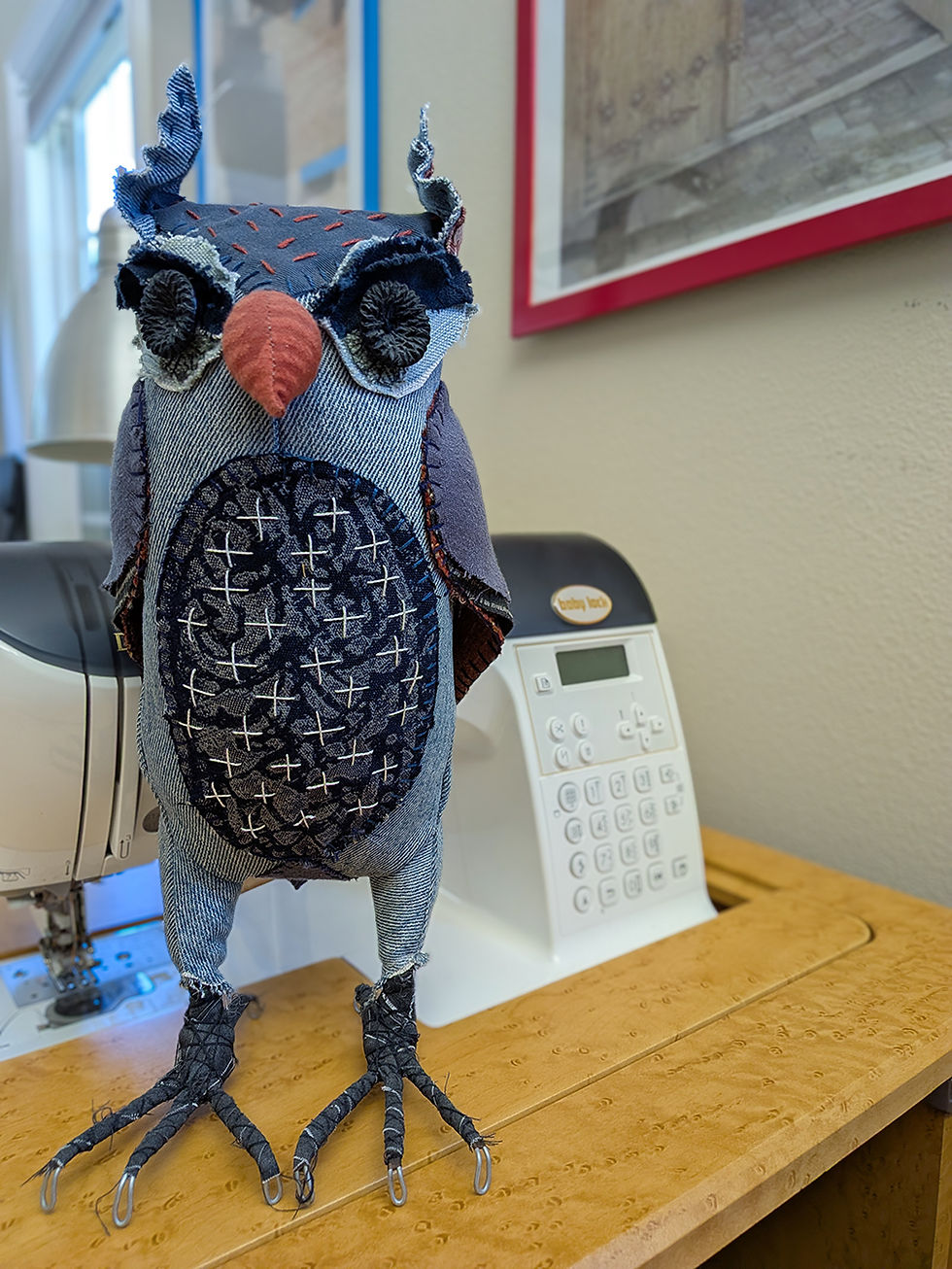
In Zwia's own words,
My most unusual studio companion is a fabric owl I made a few years ago, who sits on the cupboard and keeps me company.
The FabMo scrap material I can never resist taking home is colorful little samples from the Priceless Treasures room.
I feel most in the creating flow when it is cold and raining outside, but cozy and quiet inside.
A book or resource I recommend to every maker is You Tube videos. There are tutorials for every technique you can think of, and then some more.
The studio tool I’d rescue first in an emergency is my small, loyal sewing machine.
An art piece that I never want to sell is artworks that incorporate family textiles.
If I want to buy another artist’s craft, it is beautiful ceramic mugs.
The materials that I collect the most is embroidery thread! I'm addicted.
Artist Contact
ARTIST WEBSITE: anytexture.com
INSTAGRAM @anytexture
FACEBOOK @Any Texture Textile Art
Inspire • Create • Connect
As part of the People Around Us interview series, I invite readers to reflect on how each conversation might inform and enrich their own creative journey. Inspired by the artist's insights and experiences, these reflections highlight ideas that resonate beyond the interview itself.
Inspire
Beauty often lives beneath the surface: Zwia reminds us that discarded materials still carry stories, textures, and possibilities. By slowing down and looking more closely, we can discover value where others see waste.
Listen to the Environment: Look closely at overlooked materials—from tiny fabric scraps to discarded plastic bottles. They can become powerful conceptual artworks that invite reflection and raise awareness about environmental and social issues.
Create
Start with what you already have: Whether it's worn textiles, forgotten fabrics, a loved ones old clothes, curtains, or everyday objects, creativity begins with curiosity rather than expensive materials. Experiment, play, layer, and let the materials guide your process.
Connect
Sustainability grows through community: Share skills, exchange materials, visit creative reuse centers like FabMo, and learn from one another. Every repaired textile and every conversation helps build a more thoughtful relationship with both people and the environment.

Comments