
Delicate and Beautiful: Where Fruits and Insects Meet in Aleana's Watercolor Paintings
- Leila Ghasempor
- Nov 5, 2025
- 4 min read
Updated: Dec 25, 2025

Introduction: Aleana’s watercolor paintings bring together the delicate worlds of fruit and insects. You may have noticed tiny traces left by insects on leaves or fruits — subtle marks of nature’s quiet collaboration. Through her gentle brushwork, Aleana captures both fragility and resilience, reminding us that beauty often lives in the most unexpected pairings.

Leila (People Around Us): Aleana, I know apart from painting, you work professionally in sewing as well. Today we’re focusing on your watercolor paintings, but I’m curious — do you consider yourself more of a textile artist, a crafter, or simply an artist who enjoys exploring different mediums?
Aleana: I think I am more of a crafter... I enjoy working with materials that have form and shape and textures... especially paper and fabrics. The things I like about painting are the textures of the different handmade papers and the feel of the different brushes, and the smell of the inks.




Photo 1. Some of textile samples from Aleana, visit her website to see more.
Leila (People Around Us): There’s something deeply evocative about the smell of ink, which brings a sensory connection to the creative process. It’s a small but powerful reminder that making art is a full-body experience, not just a visual one.
Leila: Aleana, your paintings often feature fruits and insects side by side, like a dialogue between two forms of life. How did this theme first emerge in your work?
Aleana: Well, fruits and insects are one of the common themes in Asian art, so perhaps it was just embedded in me... lots of the masters of Chinese brush painting did explore this theme... and I've always liked it.
Leila: The combination feels symbolic — sweetness of fruits and survival of insects, softness and sharpness. What emotions or ideas do you hope viewers feel when they look at your paintings?
Aleana: I want to convey peace and harmony... Maybe because insects and fruit are usually not in conflict with each other, this helps with the feeling of harmony... But mostly, I just like painting insects.

Photo 2. Watercolor on Paper.
Leila: Your use of color is both subtle and vibrant — especially the greens and yellows. Could you tell us a bit about your painting process and the materials you use to create that organic texture? Is it watercolor, ink, or a combination of both? The brushwork on your insects, in particular, feels so delicate and precise.
Aleana: Like other Chinese brush painters, I use water-based inks... and the process is
more like watercolors than oils or pastels - once you put brush on the paper, you can't reverse what you've done... You might alter it a little, but you can't paint it over like oils... I think that is part of why I like insects...you have to be precise and decisive with the brushstrokes... fast, sure strokes to create their powerful legs...
Leila: That is amazing, I see — even in your brushstrokes, that sense of speed and
delicacy reflects the insects themselves. Your fast, decisive strokes capture their quick movements, while the fine, sharp lines suggest the delicacy of their antennae and limbs.
Leila: Aleana, Many artists find inspiration directly from nature. Do you paint from observation, memory, or imagination?
Aleana: I think all of the above. I do watch insects around me - and on TV nature shows...but some of the things I want to paint - like a praying mantis walking along a melon, I need to use my imagination and what I remember about how a mantis moves in other situations to paint the image I want.
Leila: When you pay close attention to insects in their environment, it seems your body awareness of these amazing creatures has deepened — an awareness that goes beyond your artistic vision.
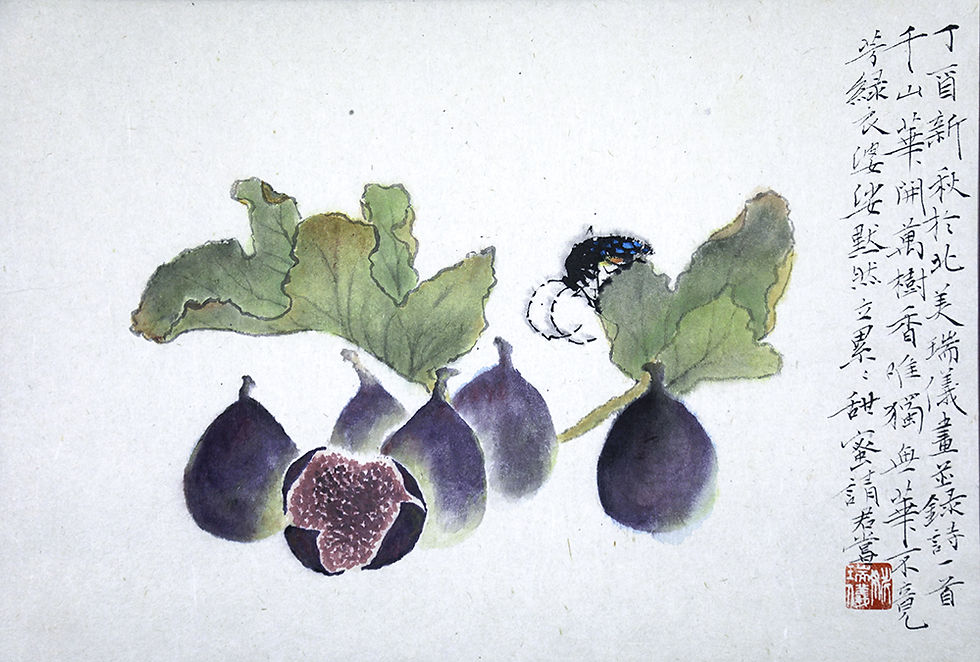
Photo 2. Watercolor on Paper.


Comments