People Around Us
After-School Art Classes
Hands Create • Minds Solve • Hearts Grow
We Are The World

Summer Art Class Projects
-
The Tree of Kindness
-
I Matter
-
Make Schools Garden
I taught these three month art class for Tk to 6th graders. My big idea was kindness. I created a tree called The Tree of Kindness; each day; as students got into the class after greetings, we had a short conversation about their daily acts of kindness that they have done or confronted. Then students wrote their actions through words, sentences, or even drawing and posted them on the tree. During these four weeks, it was our routine to start, and we also expanded the branches of kindness to love nature and various mediums, techniques, and group work.
We continued to teach them a variety of mediums, crafts, paintings, and sculptures though individual and group works, hoping to root the cooperation and community concept to be more outstanding for them and understand the differences. At the end of the last class session we developed the I Matter project. We ended our class with the Tree of Kindness project candidate receiving the kindness medal and distributing our class supplies among students. Moreover, I made small take-home crafts (called I Matter from a series she works on around children's education) for students to take home and have a meaningful takeaway from this class experience bolded by how they matter to the world.


Fig. 1. Task ID Cards: Students accomplished their daily task and created individual projects.
Collective Projects: Site Specific-Sculptural
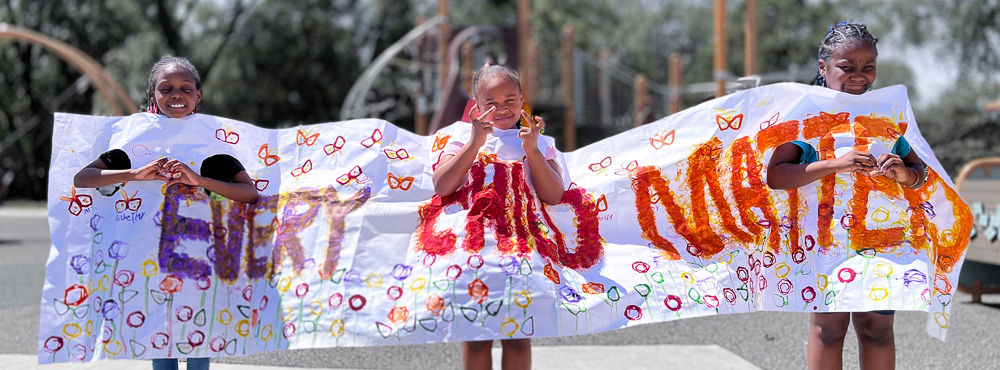
Collective Projects: I Matter, Tree of Kindness, and Make Schools Garden
"A collective voice is like a potent seed that helps our children believe in the collective consciousness and shared responsibility in society from an early age. As educators, if we prepare children for this shared responsibility, we can expect more positive changes in future society."_Ghasempor
Following individual art explorations, students had opportunities to collaborate on larger-scale group projects that celebrated shared ideas, creativity, and teamwork. These collective artworks allowed students to experience the joy of building something together, combining their unique perspectives while developing communication, cooperation, and problem-solving skills. Completing large-scale projects gave students a sense of pride and accomplishment while creating meaningful visual messages that remained with them beyond the classroom.
One of my favorite moments happened during the first week of the program. After a brainstorming session about possible projects, one of my second-grade students shared how excited he was to arrange their flower artworks and create a museum-like exhibition for their creations. His idea showed the confidence and ownership that can develop when students are trusted to contribute their voices and imagine possibilities. Experiences like this help students recognize the value of their ideas and believe in their own abilities.


Fig.2. Students works from I MATTER project and .
Make Schools Garden

Movement is another language of creativity—when children explore with their bodies, they discover new ways to express their imagination and connect with the world around them.
Performative Movement Workshops:
Learning Through Movement and Imagination
I created performative movement workshops for children that use creativity, imagination, and play to support focus, energy, and self-expression. Inspired by my art philosophy, I develop movement activities that connect with students' everyday experiences—from observing nature and animals to exploring familiar actions from their homes and communities.
Through these workshops, students transform ordinary movements into creative expressions, building confidence, awareness, coordination, and a deeper connection between their bodies, imagination, and the world around them. Movement becomes another form of storytelling where every child can participate, explore, and express their unique ideas.


Fig. 3. Students accomplished their daily task and responsibilities by volunteering and wearing their IDs.